• An improved early-winter sowing radish hybrid
• Vegetative period: 23–25 days
• Highly resistant to splitting
• A radish hybrid highly resistant to leaf and root perenosporosis
• Recommended spacing: 200–220 seeds per sq. m
A new radish hybrid for growing at the most difficult time of the season: from late autumn to early spring.
It has a high yield potential even at low temperatures and when there is a lack of light.
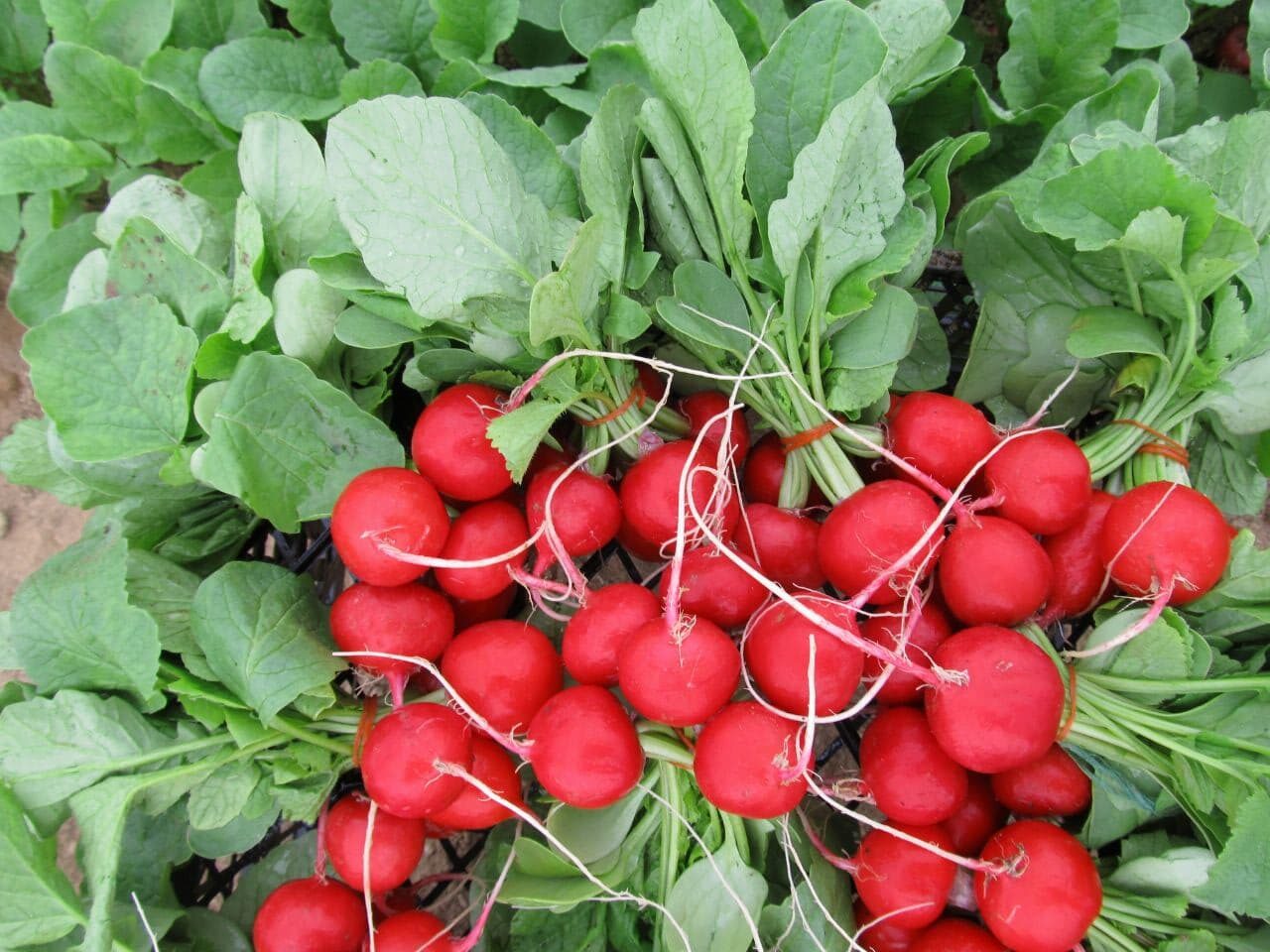
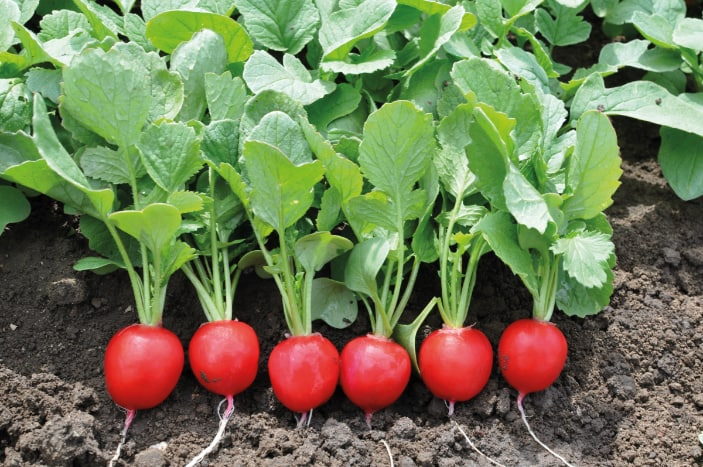
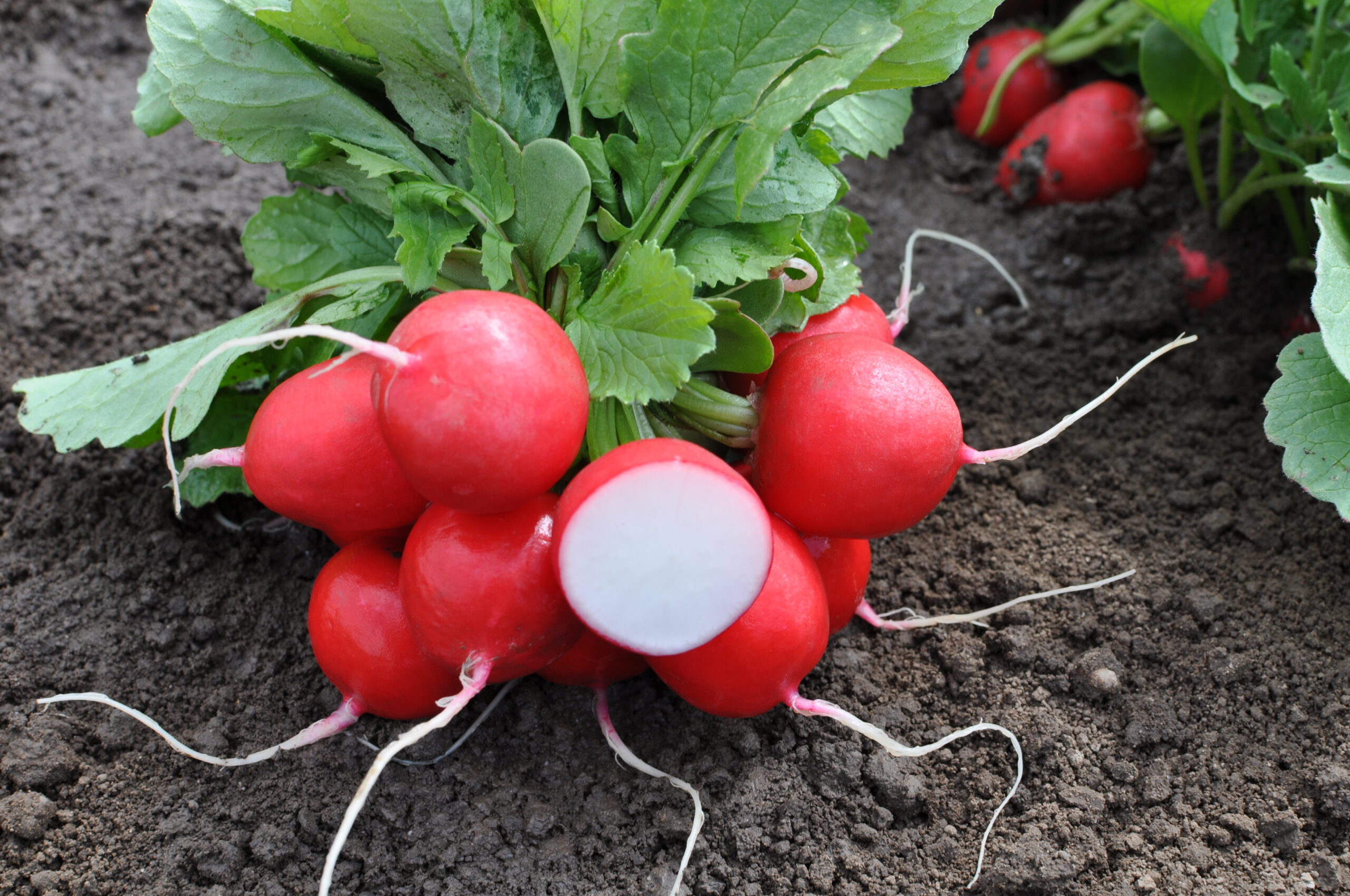
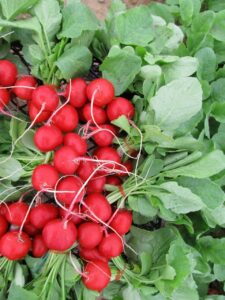
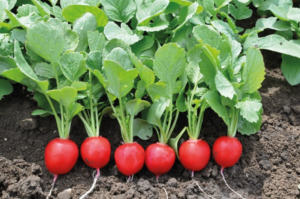
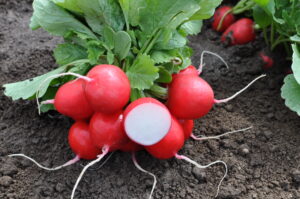
The plant forms a compact leaf apparatus. The root crops are homogeneous, crimson red, round and have snow-white flesh. The root tip is thin and short.
Best sowing dates: from October to February inclusive.
• An improved early-winter sowing radish hybrid
• Vegetative period: 23–25 days
• Highly resistant to splitting
• A radish hybrid highly resistant to leaf and root perenosporosis
• Recommended spacing: 200–220 seeds per sq. m
A new radish hybrid for growing at the most difficult time of the season: from late autumn to early spring.
It has a high yield potential even at low temperatures and when there is a lack of light.
The plant forms a compact leaf apparatus. The root crops are homogeneous, crimson red, round and have snow-white flesh. The root tip is thin and short.
Best sowing dates: from October to February inclusive.
• An improved early-winter sowing radish hybrid
• Vegetative period: 23–25 days
• Highly resistant to splitting
• A radish hybrid highly resistant to leaf and root perenosporosis
• Recommended spacing: 200–220 seeds per sq. m
A new radish hybrid for growing at the most difficult time of the season: from late autumn to early spring.
It has a high yield potential even at low temperatures and when there is a lack of light.
The plant forms a compact leaf apparatus. The root crops are homogeneous, crimson red, round and have snow-white flesh. The root tip is thin and short.
Best sowing dates: from October to February inclusive.
* Стійкі сорти можуть демонструвати деякі симптоми захворювання або поразки під інтенсивною дією шкідників, і/або під впливом несприятливих умов довкілля, і/або зважаючи на нові біотипи, хвороботворних мікроорганізмів, раси або штами шкідника, які можуть з’явитися. Температура грунту вище 27°C і інші стреси можуть здолати стійкість до нематод.
* Стійкі сорти можуть демонструвати деякі симптоми захворювання або поразки під інтенсивною дією шкідників, і/або під впливом несприятливих умов довкілля, і/або зважаючи на нові біотипи, хвороботворних мікроорганізмів, раси або штами шкідника, які можуть з’явитися.
• An improved early-winter sowing radish hybrid
• Vegetative period: 23–25 days
• Highly resistant to splitting
• A radish hybrid highly resistant to leaf and root perenosporosis
• Recommended spacing: 200–220 seeds per sq. m
A new radish hybrid for growing at the most difficult time of the season: from late autumn to early spring.
It has a high yield potential even at low temperatures and when there is a lack of light.
The plant forms a compact leaf apparatus. The root crops are homogeneous, crimson red, round and have snow-white flesh. The root tip is thin and short.
Best sowing dates: from October to February inclusive.
Legal terms
For tomatoes:
* Стійкі сорти можуть демонструвати деякі симптоми захворювання або поразки під інтенсивною дією шкідників, і/або під впливом несприятливих умов довкілля, і/або зважаючи на нові біотипи, хвороботворних мікроорганізмів, раси або штами шкідника, які можуть з’явитися. Температура грунту вище 27°C і інші стреси можуть здолати стійкість до нематод.
* Стійкі сорти можуть демонструвати деякі симптоми захворювання або поразки під інтенсивною дією шкідників, і/або під впливом несприятливих умов довкілля, і/або зважаючи на нові біотипи, хвороботворних мікроорганізмів, раси або штами шкідника, які можуть з’явитися.